About Shuai Shop
A small studio, a short list.
Shuai Shop began in 2019 with a single shelf of mugs in a narrow Kyoto workshop. We wanted to sell the kind of objects we used every day: a dripper that holds heat, an apron that softens with washing, a tray that carries the small things by the door.
Today we work with eight ceramics, textile and wood studios across Japan. The range stays deliberately short. If a piece does not earn its place on the shelf, we stop making it.
Small batches
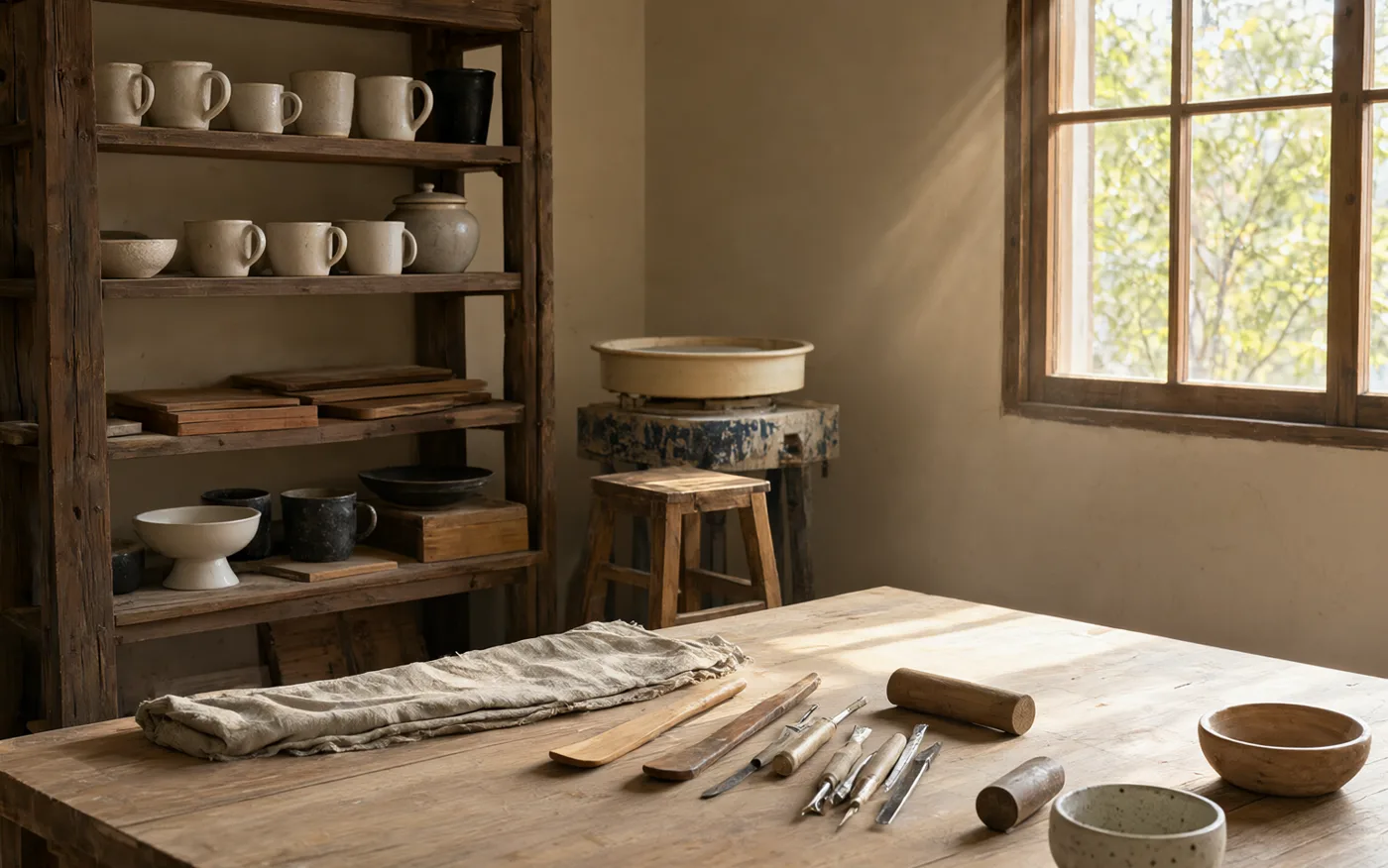
Most pieces are made in runs of thirty to eighty, so the maker can notice a change in the clay or glaze.
Honest materials
Stoneware, linen, canvas, brass and hinoki. No coatings that hide the material underneath.
Plastic-free packing
Recycled board, paper tape and a paper cushion. Nothing inside the box needs scissors.
Made to be used
Every piece is chosen for the table, not the cabinet. It should look better after a year.
How we choose
We visit every workshop before we place an order. We look for a maker who can explain why a rim is a certain thickness, or why a glaze is mixed in small batches instead of bought ready made. Those details rarely show up in a photograph, but they show up in daily use.
We pay the workshop's quoted price rather than negotiating it down. A piece that is priced fairly at the source can be repaired, replaced or remade. That is the only version of this business that lasts.
Where the pieces are made
Ceramics come from Mino in Gifu and from a family studio in Awaji. The kettle is made in Tsubame, the brass scoop in Sanjō, and the hinoki tray in Nagano. Linen and canvas are cut and sewn in Kyoto. Every order is packed and shipped from the same city.
Questions about a piece, a workshop or an order? Write tohello@shuai-shop.example. We reply within one to two business days.